
Web Accessibility Solutions
Find barriers across websites and web applications and improve them.


Find, fix and monitor accessibility barriers across your website, mobile app and digital content, in line with WCAG 2.2 Level AA.
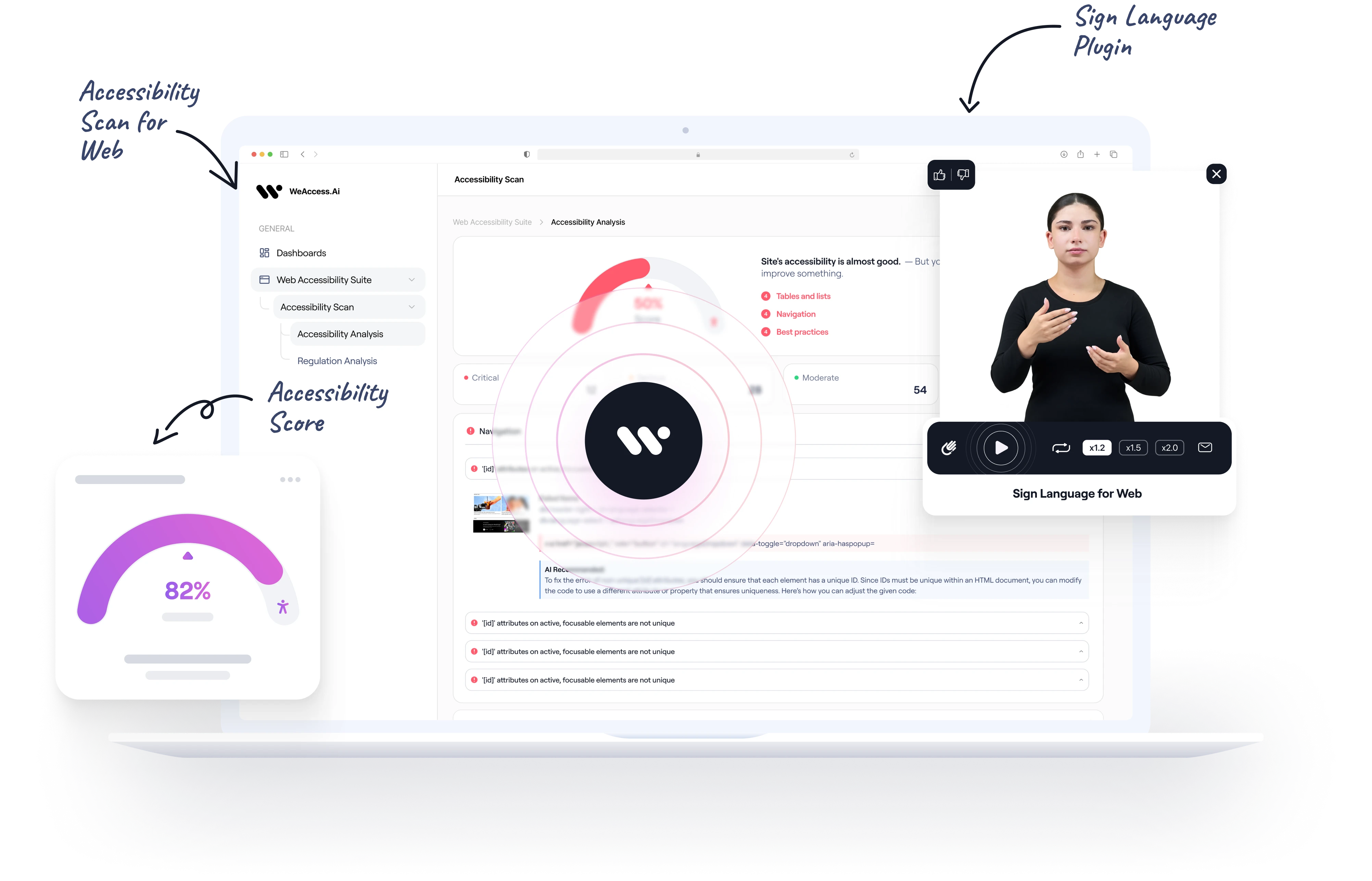

















For many Deaf people, the first language is sign language, not written language. WeAccess.Ai brings sign language support to websites, documents, videos and digital services.
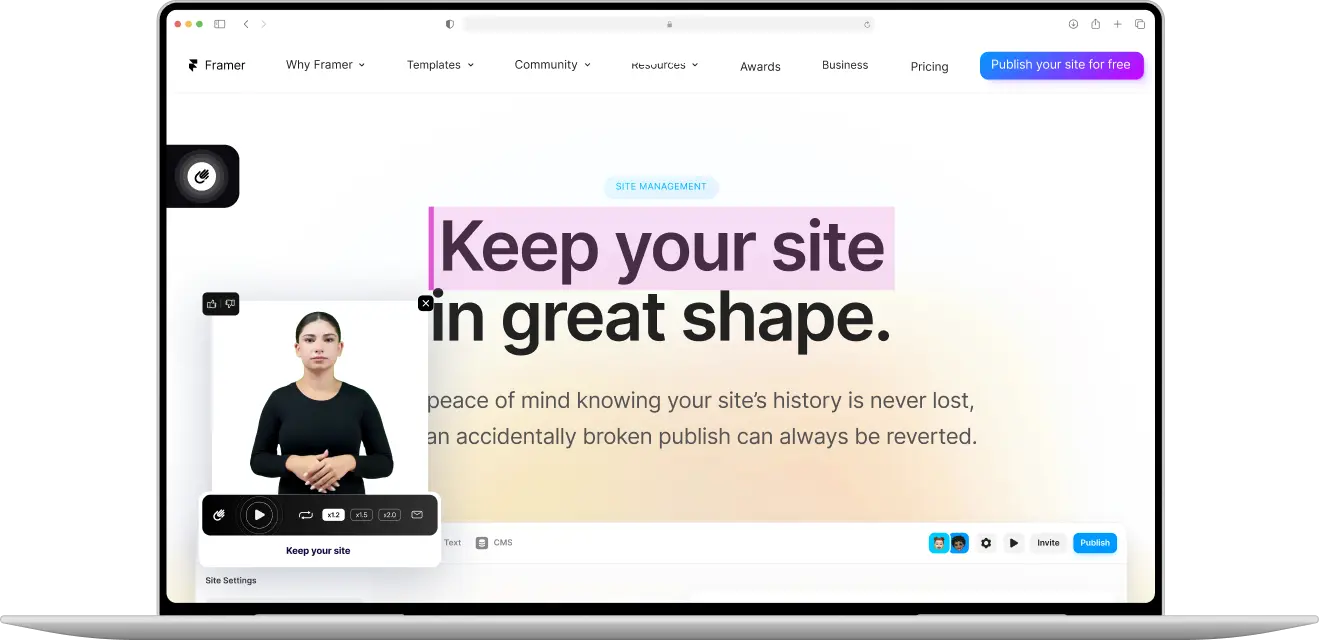
Add sign language support to your website. AI-powered translation and videos produced with real people present your content to Deaf users in their own languages. There is no need to change your site's design.
Accessibility is no longer a matter of good intentions; it is a defined requirement in many countries. The first step is understanding which regulatory framework applies to your organization.
Find barriers across websites and web applications and improve them.
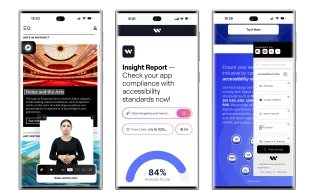

Test and improve accessibility across native iOS and Android experiences.
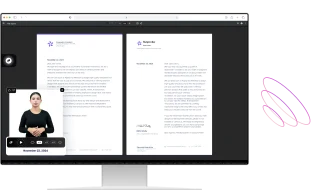

Improve the accessibility of PDFs, Word documents, and presentations for assistive technologies.
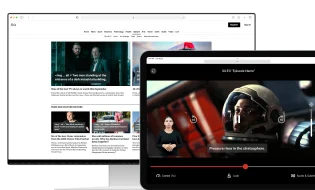

Create video and visual content that more people can perceive and understand.
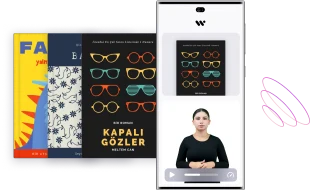

Connect physical content to accessible digital experiences.

Integrate accessibility directly into your digital products with Accessibility Tool, Web Accessibility Scan, Alt Text Generator, Sign Language for Websites, and Sign Language for Video.
Identify accessibility barriers, understand their impact, prioritize remediation and track progress from one place.
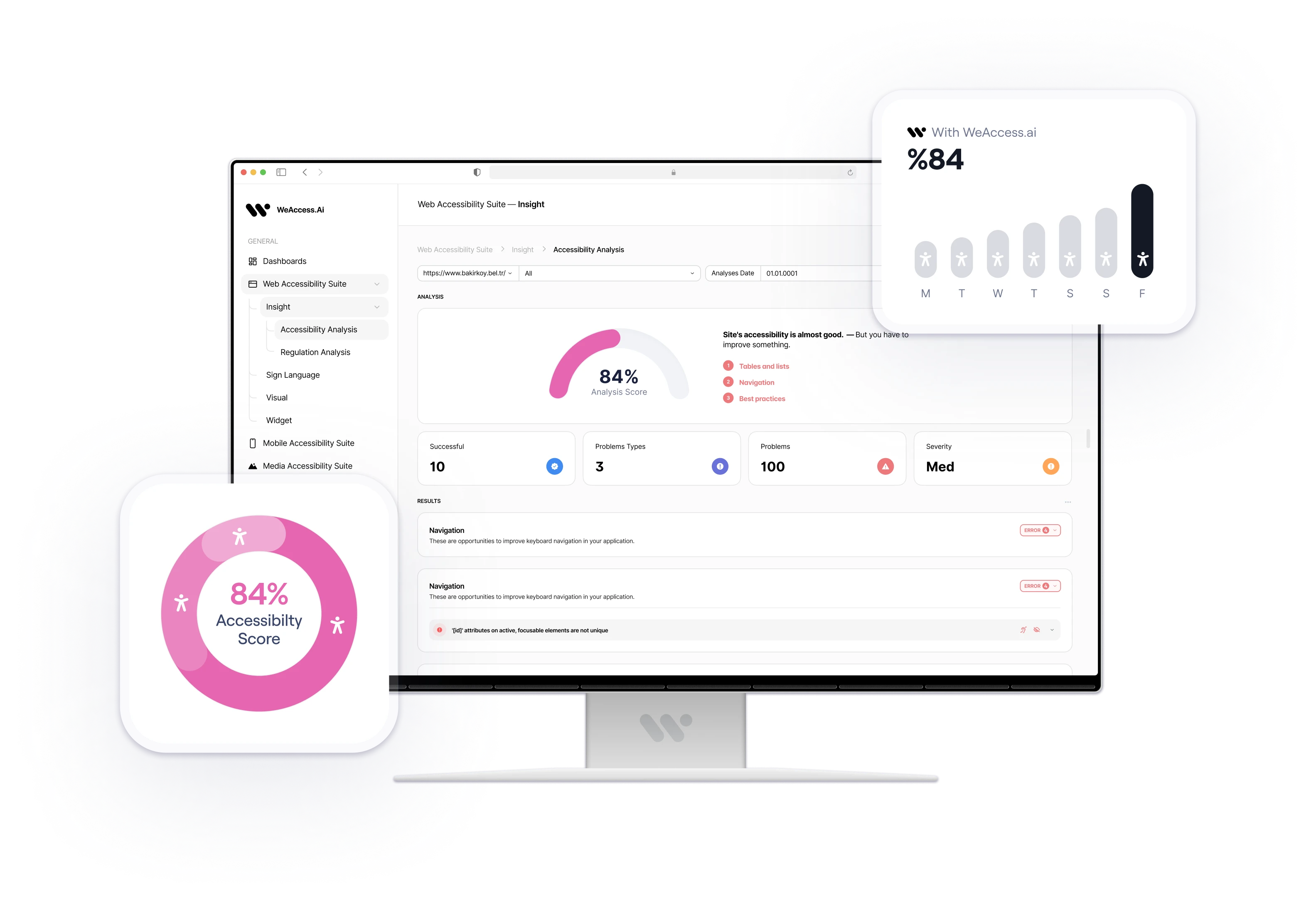
Understand where accessibility barriers exist.
Resolve accessibility issues based on impact and priority.
Validate improvements and document your accessibility status.
Keep accessibility sustainable as your digital products evolve.
Run a quick accessibility check and discover potential barriers on your website. Automated scanning cannot detect every issue.
The accessibility score is based on automated test results. It is not a statement of WCAG or regulatory compliance. A full assessment requires manual testing.
Step 1 of 7
Answer seven quick questions. Based on your industry, applicable regulations, digital assets and user priorities, we will list which of our 16 products fit you.

See how WeAccess.Ai can help your organization manage accessibility across web, mobile, documents and media.
Support accessibility compliance efforts across public-sector websites, mobile applications and digital services.
Improve the accessibility and usability of the shopping experience, from product discovery to checkout.
Make it easier for users to access banking, financial, and insurance services independently and accessibly.
Make information and services from hospitals, healthcare organizations and digital health platforms more accessible.
Improve accessibility across telecom operators’ websites, mobile apps, customer portals, and digital services.
Make video, audio, and other digital content on news, broadcasting, and streaming platforms more accessible to different user needs.
Improve the accessibility of search, booking, and digital service experiences across hotel, travel, and reservation platforms.
Make digital services across airline, railway, public transportation and ticketing platforms more accessible.
Integrate accessibility into the design, development, and testing processes of SaaS platforms and software products.
Make digital content, documents, and learning experiences more accessible across schools, universities, and educational platforms.
We support you at every stage of your accessibility journey. With continuous monitoring, improvement, and expert support, we help sustain accessibility.
Use automation for scale and accessibility specialists for the issues that require human judgment.
We design digital experiences with the diverse needs of users in mind. We treat accessibility as a core part of the design, not an afterthought.
We support your work toward current accessibility standards. We help simplify your efforts to meet WCAG, EAA, ADA and other international requirements.
We build accessibility as a sustainable capability, not a one-time fix.
In accessibility, results are demonstrated not just through reports, but through measurable improvement. Below, we compare the initial assessment results with post-remediation retesting across two projects.
On a high-volume financial platform, accessibility issues that directly affected users' ability to complete transactions were prioritized. The initial assessment identified 93 accessibility issues. After the first remediation round, a retest brought that number down to 18.
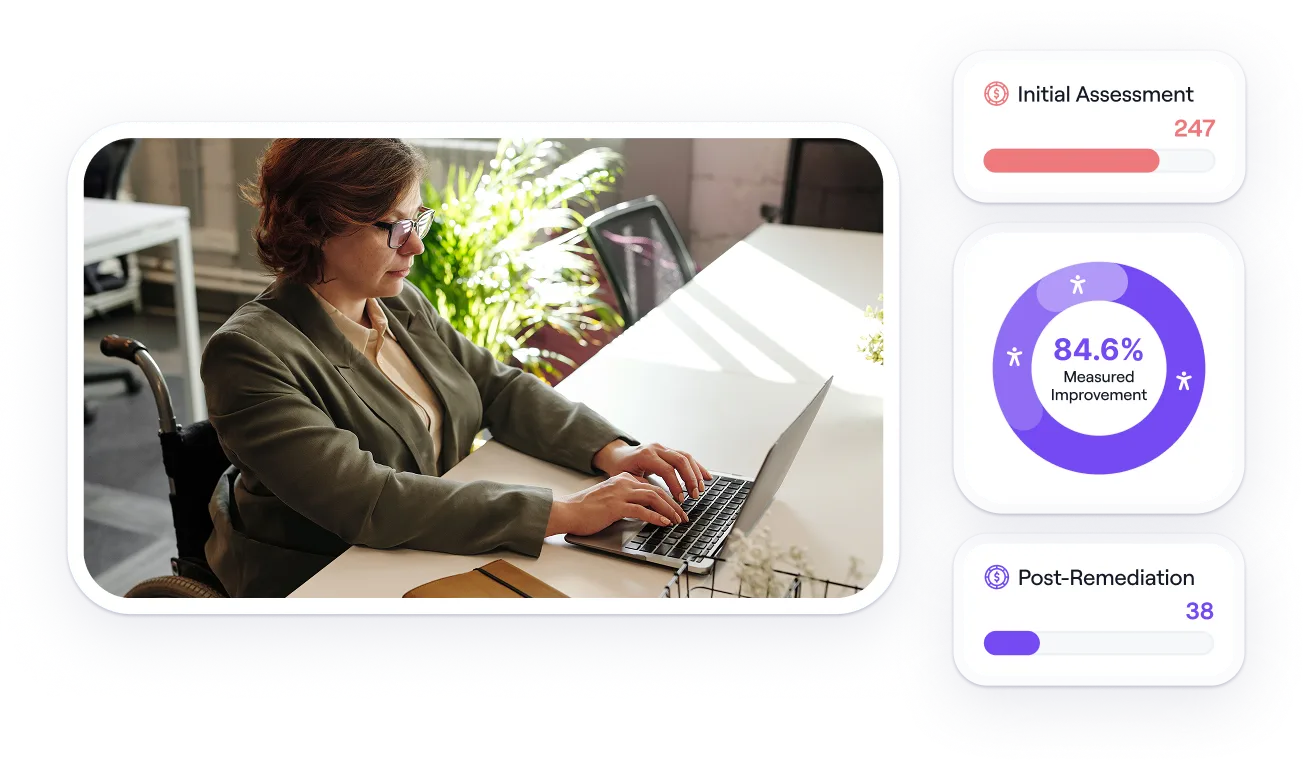
The initial accessibility assessment identified a total of 93 issues. They related to keyboard navigation, form fields, color contrast, and screen reader compatibility. Of these, 31 were classified as critical, 37 as high, and 25 as medium priority.
Our specialists analyzed the platform with automated scans and manual accessibility testing. The 31 critical issues affecting transaction completion flows were prioritized.
We worked on the prioritized issues together with the development team. After the first remediation round, the platform was retested. 19 of the 31 critical issues were verified as resolved. Work on the remaining issues is ongoing.
In the retest after the first remediation round, total accessibility issues dropped from 93 to 18. This is a reduction of about 81%. Accessibility barriers affecting transaction flows were significantly reduced.
A new era with the EAA
As of 28 June 2025, accessibility requirements apply to the products and services covered by the EAA. For organisations in scope, accessibility is now a defined obligation.
An international accessibility guideline used to evaluate the accessibility of web content. It is one of the key references for understanding and testing the technical accessibility requirements of your website and digital products.
A European standard for the accessibility of information and communication technologies. It provides a key reference for evaluating accessibility requirements for websites, software, and other ICT products.
An EU directive that establishes accessibility requirements for certain products and services. The requirements within its scope have applied since June 28, 2025.
The Americans with Disabilities Act (ADA) is one of the key U.S. federal legal frameworks prohibiting discrimination based on disability. The accessibility of digital services is also linked to ADA requirements, particularly for public services.
It is a U.S. federal accessibility standard governing the accessibility of information and communication technology (ICT) used by federal agencies. It is particularly important for federal agencies and organizations that provide technology to them.
The Presidential Circular dated June 21, 2025, focuses on the accessibility of websites and mobile applications. It strengthens the monitoring and compliance framework for the digital accessibility processes of relevant institutions and organizations in Türkiye.
We go beyond identifying accessibility issues. From assessment to continuous monitoring, we support the process end to end.
Identify the accessibility standards and regulations that apply based on your country, industry, and digital products.
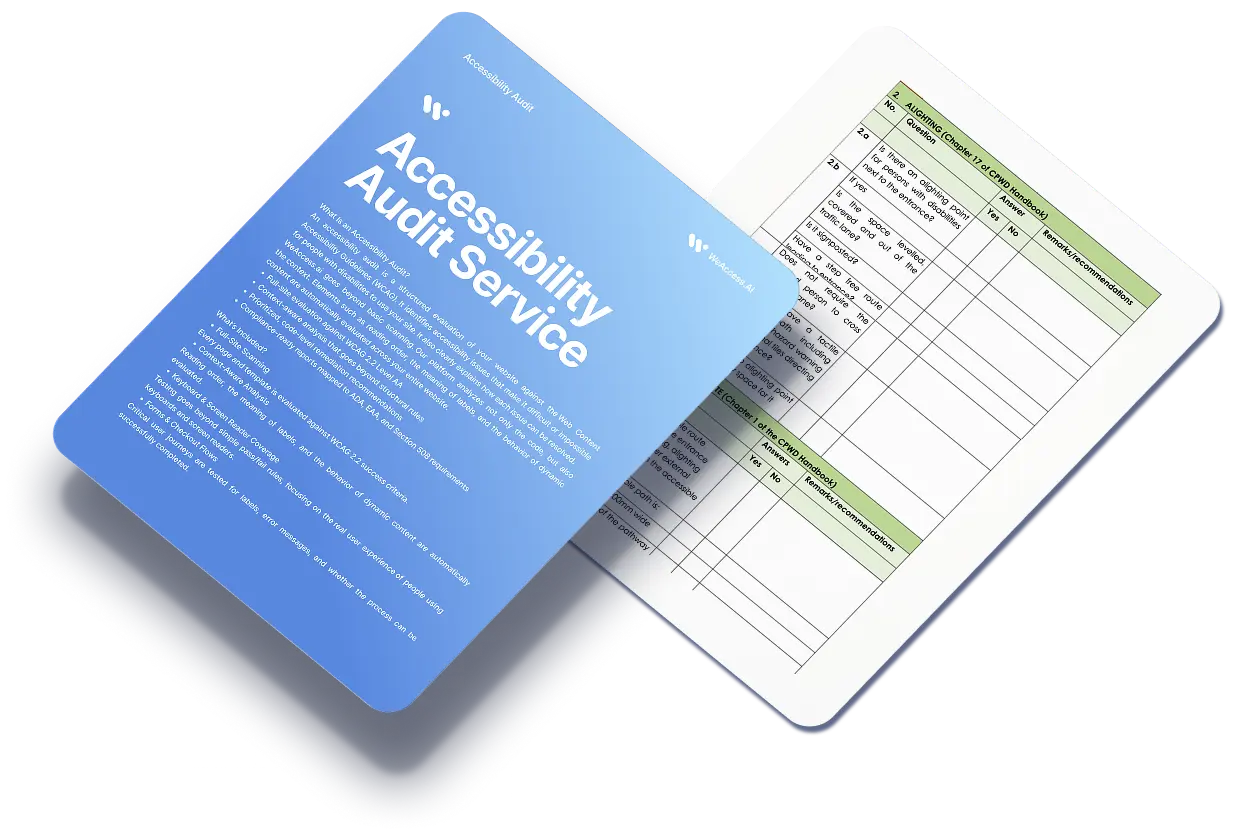
Let’s plan together how accessibility fits into your product development process. Through accessibility strategy, standard selection, team guidance and technical consulting, we build a roadmap tailored to your organisation.
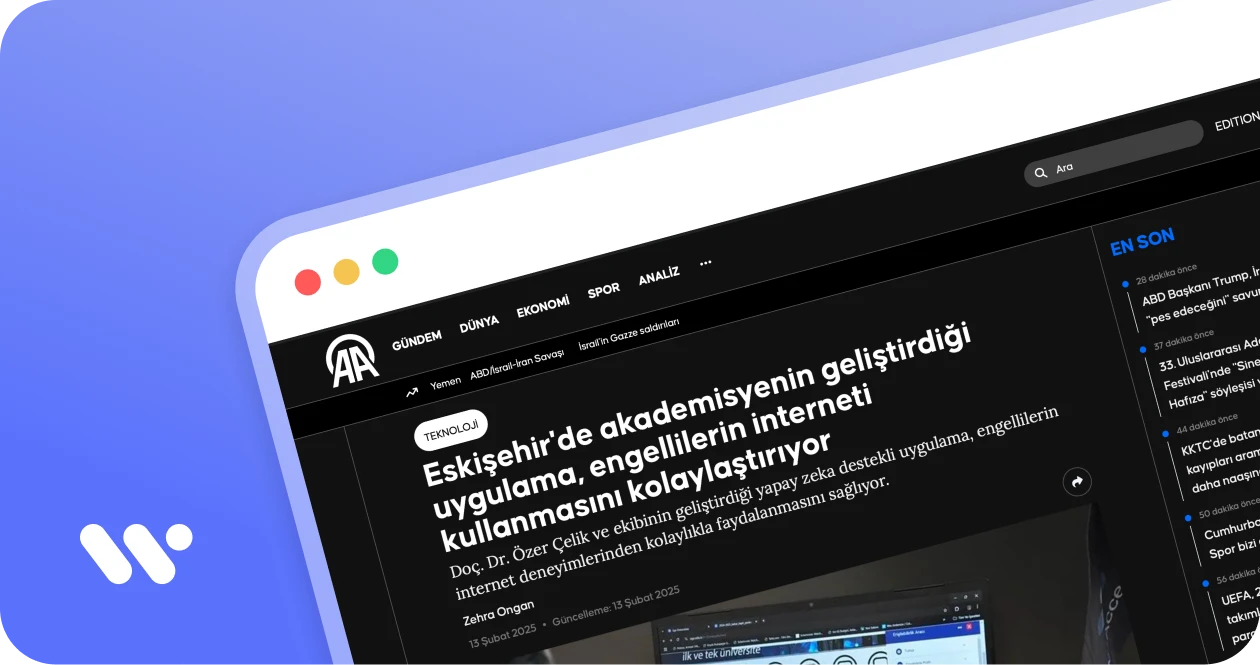 Read the Article — WeAccess.ai Featured in Anadolu Agency for Digital Accessibility Solutions
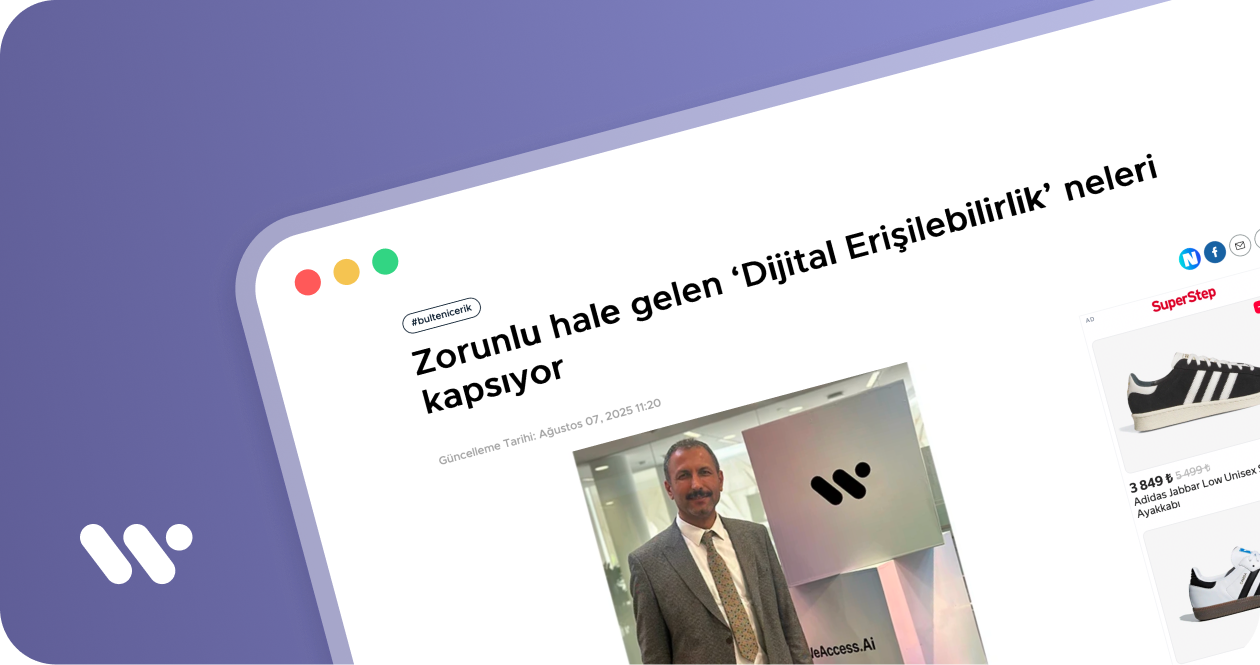 Read the Article — WeAccess.ai CEO Özer Çelik Discussed Digital Accessibility in Hürriyet
 Read the Article — WeAccess.ai’s SignOnCall Solution Featured by TRAI
 Read the Article — Turkish Academic in China with an Artificial Intelligence Project
We see digital accessibility as an essential part of our user experience.
With WeAccess.ai we identified the accessibility issues on our platform far more easily and carried out the improvements we needed. Moving through the whole process in a clear, well-organised way, without being buried in technical detail, was a real advantage for us.

We care that our technology is usable by everyone.
Making our digital platforms more accessible was an important step for us. WeAccess.ai helped us understand the process and identify the improvements to prioritise. We moved forward with a practical roadmap that fit our team’s needs.

Get your questions answered below or contact us for a deep dive today.
Digital accessibility is the design, technology and development approach that makes websites, mobile apps and digital products usable by everyone, including persons with disabilities. It aims to let users with visual, hearing, physical or cognitive differences reach content and functionality independently. International standards such as WCAG guide how accessible digital experiences are built. Learn how to make a website accessible
We evaluate against WCAG 2.1 and 2.2 (A, AA, AAA), EN 301 549, the European Accessibility Act (EAA), ADA and Section 508. Our reports show which success criterion failed, the related clause and the recommended fix side by side.
Yes. Alongside websites and web applications we test iOS and Android apps. Mobile testing includes manual verification on real devices with screen readers such as VoiceOver and TalkBack.
We do both. Every finding comes with a code-level remediation suggestion, we work alongside your development team when needed, and we run the verification test once the fixes are in place.
Our sign language solutions add avatar and video based layers that translate your content into sign language. Deaf and hard of hearing users can then reach the content in their own language, not only as text.
Yes. For multi-brand and multi-country organisations we run long term programs covering continuous monitoring, team training, accessibility policy design and regular compliance reporting.
See how WeAccess can help your organization manage accessibility across web, mobile, documents and media.